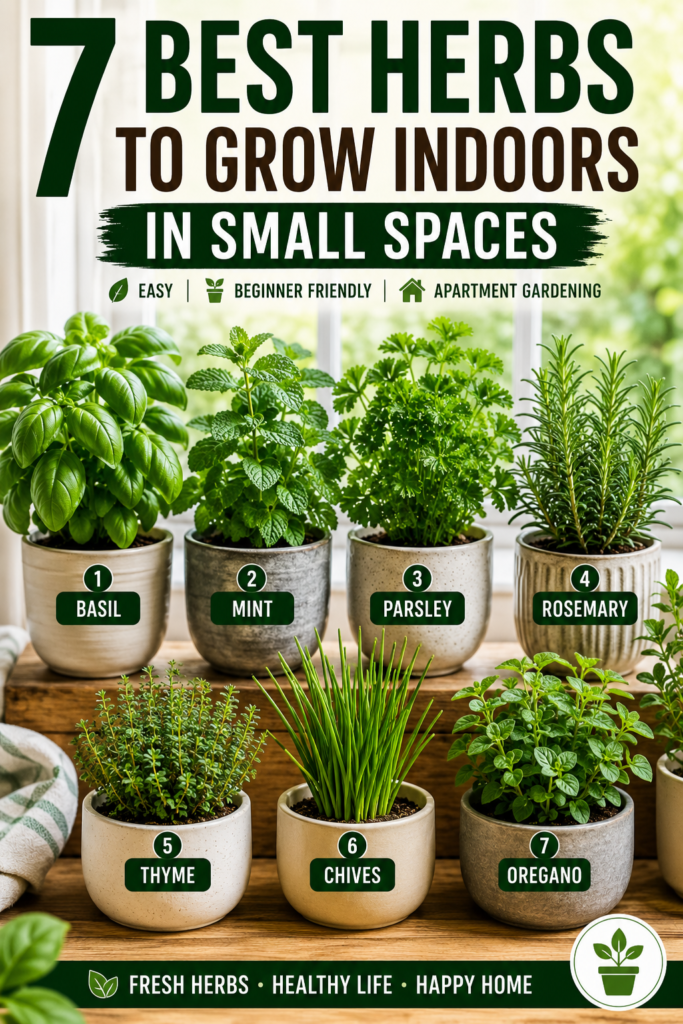
7 Best Herbs to Grow Indoors in Small Spaces
Growing fresh herbs indoors is an easy way to add greenery and fresh flavor to your home, even if you live in a small apartment. You don’t need a backyard or a large garden. A sunny windowsill, a few containers, and basic care can be enough to start your own indoor herb garden.
Here are 7 of the best herbs to grow indoors in small spaces, especially for beginners.
1. Basil
Basil is one of the easiest and most popular herbs to grow indoors. It grows well in a sunny window and can provide fresh leaves for pasta, salads, sauces, and other meals.
Growing tips:
- Place it near a bright, sunny window.
- Keep the soil lightly moist.
- Use a pot with drainage holes.
- Harvest the leaves regularly to encourage new growth.
2. Mint
Mint grows quickly and is perfect for indoor containers. Its refreshing leaves can be used in teas, drinks, desserts, and cooking.
Growing tips:
- Give mint bright, indirect sunlight.
- Keep the soil consistently slightly moist.
- Use a separate container because mint can spread quickly.
- Trim regularly to keep the plant compact.
3. Parsley
Parsley is a versatile herb that can grow successfully in containers indoors. Both curly and flat-leaf varieties can add fresh flavor and color to everyday meals.
Growing tips:
- Place it near a bright window.
- Water when the top layer of soil begins to dry.
- Choose a container with enough depth for its roots.
- Harvest the outer stems first.
4. Rosemary
Rosemary is an excellent choice if you want an aromatic herb that doesn’t require frequent watering. Its fragrant leaves are commonly used with roasted vegetables, potatoes, and other dishes.
Growing tips:
- Give rosemary plenty of sunlight.
- Allow the soil to dry slightly between waterings.
- Avoid keeping the roots constantly wet.
- Provide good air circulation.
5. Thyme
Thyme is a compact herb that works especially well in small apartments and kitchens. It doesn’t need a large container and can thrive with plenty of sunlight.
Growing tips:
- Place it in a sunny location.
- Use well-draining soil.
- Water when the soil feels dry.
- Trim lightly to encourage fresh growth.
6. Chives
Chives are compact, easy to maintain, and great for beginners. Their mild onion-like flavor works well in eggs, soups, salads, potatoes, and other dishes.
Growing tips:
- Keep chives near a sunny window.
- Water when the soil starts to dry.
- Cut the leaves regularly.
- Avoid letting the soil remain waterlogged.
7. Oregano
Oregano is another great herb for an indoor garden. It grows well in containers and can provide a steady supply of flavorful leaves for pizzas, pasta, sauces, and Mediterranean-inspired dishes.
Growing tips:
- Provide several hours of bright light.
- Use well-draining soil.
- Let the soil dry slightly between watering.
- Trim the plant regularly to encourage bushier growth.
Tips for Growing Herbs in Small Spaces
You don’t need a lot of room to create an indoor herb garden. Keep these simple tips in mind:
Choose the Right Location
Most herbs need plenty of light. A bright kitchen or south-facing window can work well. If natural light is limited, a suitable indoor grow light can help.
Use Containers With Drainage
Always choose containers with drainage holes. Excess water can cause root problems and make herbs difficult to maintain.
Don’t Overwater
One of the most common mistakes beginners make is watering too frequently. Check the soil before watering and make sure excess water can drain away.
Harvest Regularly
Regular harvesting can encourage many herbs to produce fresh growth. Avoid removing too much of the plant at once.
Give Plants Enough Space
Even in a small apartment, avoid overcrowding your pots. Good airflow can help keep plants healthier.
Final Thoughts
Growing herbs indoors is a simple way to enjoy fresh greenery and flavorful ingredients without needing a large garden. Basil, mint, parsley, rosemary, thyme, chives, and oregano are all excellent options for small spaces.
Start with one or two herbs, learn their basic needs, and gradually build your own indoor herb garden. With the right light, containers, watering routine, and regular care, even a small windowsill can become a productive little garden.