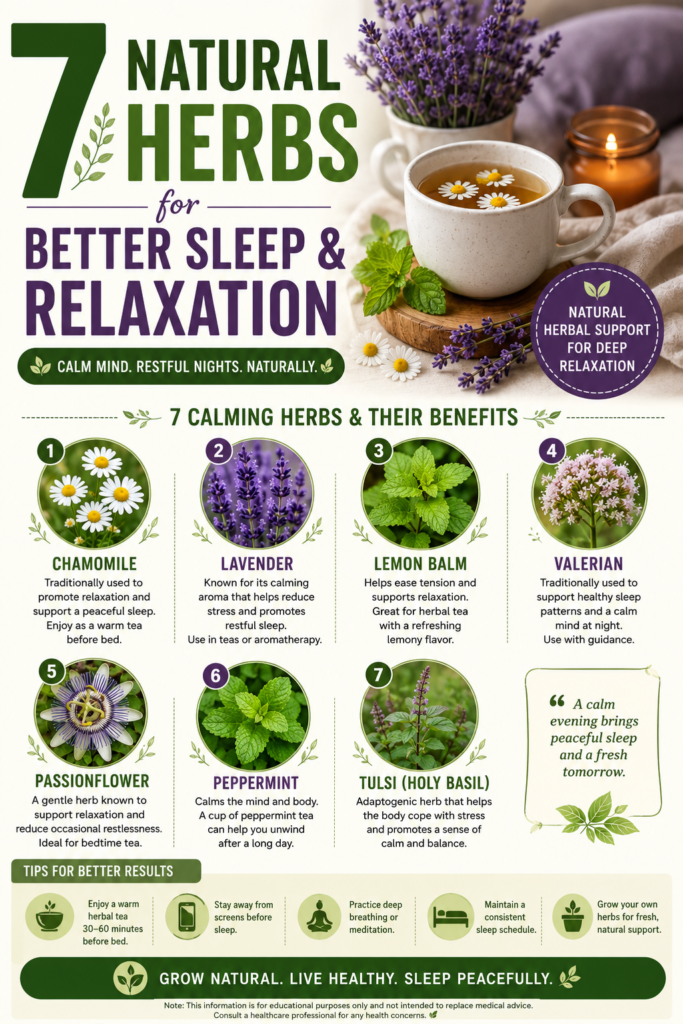
7 Natural Herbs for Better Sleep & Relaxation
Getting better sleep does not always require complicated routines. Creating a calm evening environment, maintaining a consistent bedtime, and exploring traditional herbs may help support relaxation before sleep. Some herbs commonly associated with relaxation and nighttime routines include chamomile, lavender, lemon balm, valerian, passionflower, peppermint, and tulsi.
If you are a beginner, start with one herb and learn how it fits into your routine rather than trying several at once.
1. Chamomile
Chamomile is one of the most popular herbs associated with relaxing bedtime routines.
It is commonly enjoyed as a warm herbal tea in the evening. The mild flavor and caffeine-free nature of chamomile tea make it a popular choice for people looking for a calming nighttime drink.
For beginners, chamomile is also relatively easy to grow in a sunny container.
Simple idea
Grow chamomile in a pot near a sunny window, balcony, or garden area and harvest the flowers when they are ready.
2. Lavender
Lavender is well known for its pleasant floral aroma and is often used to create a relaxing atmosphere.
Its scent can be incorporated into an evening routine through dried flowers, sachets, or other traditional uses.
Lavender can also make an attractive addition to a home herb garden because of its distinctive flowers and fragrance.
Growing tip
Lavender generally prefers plenty of sunlight and well-draining soil. Avoid keeping its soil constantly wet.
3. Lemon Balm
Lemon balm has a fresh lemon-like aroma and has traditionally been used in calming herbal preparations.
Its pleasant scent makes it a popular herb for evening teas and relaxation routines.
Lemon balm can grow well in containers, making it a practical choice for beginners with limited garden space.
Container tip
Use a pot with drainage holes and give the plant enough room to spread.
4. Valerian
Valerian is a traditional herb that has been associated with nighttime and relaxation routines.
Unlike chamomile or peppermint, valerian has a stronger and more distinctive aroma.
Because herbs can interact with medications and may not be suitable for everyone, people considering valerian supplements or concentrated preparations should speak with a qualified healthcare professional first.
For gardening purposes, valerian can be an interesting addition to a larger herb collection.
5. Passionflower
Passionflower is another herb traditionally associated with relaxation.
It is sometimes included in herbal teas and other preparations designed for nighttime routines.
If you are growing passionflower, remember that some varieties are climbing plants and may require additional space or support.
Beginner tip
Use a trellis or another suitable support if your variety needs something to climb on.
6. Peppermint
Peppermint is better known for its refreshing flavor and traditional digestive uses, but it can also be part of a relaxing evening tea routine.
Its strong minty flavor makes it easy to recognize, and it is one of the most convenient herbs to grow in containers.
Important growing tip
Keep peppermint in its own container because it can spread quickly.
For more beginner-friendly container herbs, check out our guide on 10 Medicinal Herbs Beginners Can Grow in Pots.
7. Tulsi
Tulsi, also known as holy basil, is a popular herb in many traditional wellness practices.
It can be grown in containers and is a good option for people who want to add a familiar herb to their home garden.
Tulsi generally appreciates warmth, sunlight, and appropriate watering.
Growing tip
Choose a sunny location and use a container with good drainage.
How Can Herbs Fit Into a Nighttime Routine?
Herbs work best as part of an overall relaxing routine rather than being treated as a quick solution for sleep problems.
A simple evening routine could include:
- Reducing bright screen exposure before bed.
- Keeping your bedroom comfortable and quiet.
- Following a consistent bedtime.
- Enjoying a caffeine-free herbal tea if it suits you.
- Reading or doing another relaxing activity.
- Keeping your nighttime routine simple and consistent.
The goal is to create signals that tell your body it is time to slow down.
Should You Grow These Herbs at Home?
Yes, many herbs traditionally associated with relaxation can be grown at home.
You do not need a large garden. Several options can grow successfully in containers.
For example, a beginner could start with:
- Chamomile
- Lavender
- Lemon balm
- Peppermint
- Tulsi
These can give you a simple starting collection without requiring a large amount of space.
If you have a balcony, check out our guide on Best Medicinal Herbs to Grow on a Balcony for more ideas.
Common Mistakes When Growing Herbs
Overwatering
One of the most common mistakes beginners make is watering plants too frequently.
Check the soil before watering and make sure your containers have drainage holes.
Not Enough Sunlight
Many herbs require several hours of sunlight.
Observe your growing space before deciding where to place your pots.
Using Poor Drainage
Excess water can remain around the roots when containers do not drain properly.
Always choose pots with drainage holes.
Growing Too Many Herbs at Once
It is tempting to buy many different herbs when starting a garden.
Instead, begin with three to five varieties and learn how they respond to your environment.
Can You Grow a Relaxation Herb Garden in Pots?
Absolutely.
A small container garden can include several herbs associated with relaxing evening routines.
A simple beginner setup could include:
Pot 1: Chamomile
Pot 2: Lavender
Pot 3: Lemon balm
Pot 4: Peppermint
Pot 5: Tulsi
Place the pots where they receive suitable light and make sure each container has proper drainage.
What Supplies Do You Need?
You do not need expensive gardening equipment to start.
Basic supplies include:
- Containers with drainage holes
- Quality potting soil
- Herb seeds or young plants
- Small watering can
- Plant labels
- Gardening gloves
- A sunny growing location
If you want a more convenient starting setup, you can also check our Medicinal Garden Kit Review to see what the kit includes and whether it is suitable for your needs.
A Simple Beginner Evening Routine
Once your herbs are growing, you can create a simple evening ritual around your garden.
Spend a few minutes checking your plants, watering them only when necessary, harvesting suitable herbs, and preparing your space for the evening.
The gardening process itself can become a relaxing hobby.
Remember that the purpose is not to replace healthy sleep habits but to create a calm and enjoyable routine.
Frequently Asked Questions
What is the best herb for a relaxing nighttime routine?
Chamomile and lavender are two of the most commonly associated herbs with relaxation. Individual responses can vary, so choose an option that fits your preferences and routine.
Can I grow sleep-related herbs in pots?
Yes. Chamomile, lavender, lemon balm, peppermint, and tulsi can all be grown in containers when their basic growing requirements are met.
Which herb is easiest for beginners?
Peppermint is generally an easy container herb, while chamomile and tulsi can also be good options depending on your growing conditions.
Can herbs cure sleep problems?
Herbs should not be treated as a cure for insomnia or other sleep disorders. They are better viewed as part of a broader relaxation and wellness routine. If you have ongoing sleep problems, speak with a healthcare professional.
Can I grow these herbs on a balcony?
Yes. Many herbs can grow on balconies if they receive enough suitable sunlight and are planted in containers with proper drainage.
Final Thoughts
A relaxing herb garden can be a simple and enjoyable addition to your home.
Chamomile, lavender, lemon balm, valerian, passionflower, peppermint, and tulsi are all traditionally associated with relaxation or nighttime routines in different ways. However, you do not need to grow all seven.
Start with two or three herbs, learn their basic requirements, and build your garden gradually.
Ready to start growing? Explore our Medicinal Garden Kit Review and see whether it could be a convenient way to begin your own home herb garden.
Disclaimer: This article is for general gardening and educational information only. Herbs and herbal preparations are not a substitute for professional medical advice, diagnosis, or treatment. If you take medication, are pregnant or breastfeeding, or have an ongoing health concern, consult a qualified healthcare professional before using herbs for wellness purposes.