How to Start a Medicinal Herb Garden for Beginners
Starting a medicinal herb garden is easier than it may seem. Beginners can start with just a few pots, good-quality soil, enough sunlight, and easy-to-grow herbs such as mint, tulsi, basil, chamomile, and lavender. You do not need a large backyard—even a balcony, patio, or sunny windowsill can work for many herbs.
Why Start a Medicinal Herb Garden?
Growing herbs at home gives you a simple way to learn about plants while creating a useful and attractive garden. Many herbs traditionally associated with wellness are also easy to grow in containers.
The key is to start small rather than planting too many herbs at once.
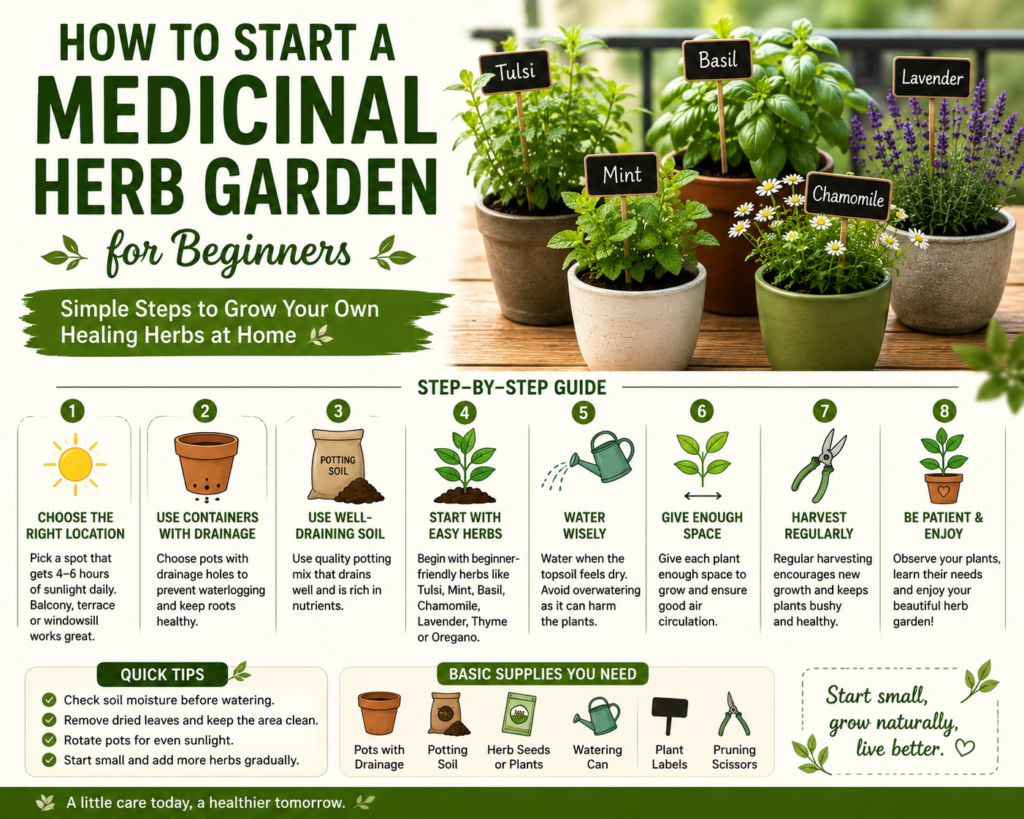
1. Choose the Right Location
Most herbs need plenty of sunlight to grow well. Choose a location that receives around 4–6 hours of sunlight per day, depending on the herb.
A sunny balcony, patio, terrace, or windowsill can be a good starting point.
If your space receives less sunlight, choose herbs that can tolerate slightly lower-light conditions rather than forcing sun-loving plants to grow there.
2. Start With Easy Herbs
Beginners should choose herbs that are relatively simple to maintain.
Good options include:
- Mint
- Tulsi
- Basil
- Chamomile
- Lavender
- Rosemary
- Thyme
- Oregano
You do not need all eight. Starting with three or four herbs makes watering and maintenance much easier.
For more ideas, read our guide on 10 Medicinal Herbs Beginners Can Grow in Pots.
3. Pick Containers With Drainage Holes
One of the most common beginner mistakes is using containers that do not drain properly.
Choose pots with drainage holes at the bottom so excess water can escape. This helps prevent waterlogged soil and reduces the risk of root problems.
Make sure each pot is large enough for the mature size of the herb you are growing.
4. Use Well-Draining Soil
Herbs generally perform better in soil that drains well.
A quality potting mix designed for container plants is a simple choice for beginners. Avoid packing the soil down too tightly because roots need access to air as well as moisture.
Before planting, check that water can move through the container rather than sitting at the bottom.
5. Plant Your Herbs
Once your containers and soil are ready, plant your seeds or young plants according to their individual requirements.
Follow the seed packet instructions for planting depth and spacing. If you are using young plants, gently loosen the roots before placing them into the soil.
Water lightly after planting.
6. Learn How Much Water Your Herbs Need
Avoid following a strict watering schedule without checking the soil.
Instead, feel the top layer of soil. If it feels dry, the plant may need water. If it is still noticeably damp, wait before watering again.
Overwatering is one of the easiest mistakes for a new container gardener to make.
7. Give Each Herb Enough Space
Some herbs, especially mint, can spread quickly.
Giving plants enough space improves airflow and makes harvesting easier. If you are growing several herbs, using separate containers can also make it easier to control their growth.
For small balconies, a few individual pots may be more practical than one large planter.
8. Common Beginner Mistakes to Avoid
A few simple mistakes can make herb gardening unnecessarily difficult.
Overwatering
More water does not always mean faster growth. Check the soil before watering.
Too Little Sunlight
Many herbs need several hours of light each day. Move containers if plants are becoming weak or leggy.
Planting Too Many Herbs
Starting with a large collection can make maintenance difficult. Begin with a few herbs and expand gradually.
Poor Drainage
Containers without drainage holes can hold excess water around the roots.
Ignoring Plant Differences
Not every herb needs exactly the same amount of sunlight, water, or space. Check the basic requirements of each plant.
9. What Supplies Do You Need?
A beginner herb garden does not require complicated equipment.
Start with:
- A few containers with drainage holes
- Quality potting soil
- Herb seeds or young plants
- A small watering can
- Plant labels
- A sunny growing location
If you want a convenient way to get started, you can also read our Medicinal Garden Kit Review to see what the kit contains and whether it makes sense for a beginner garden.
10. Expand Your Garden Slowly
Once your first herbs are growing successfully, you can add more varieties.
Try experimenting with different containers and locations to learn what works best in your space.
For another beginner-friendly idea, check out our guide to What to Plant in a Medicinal Herb Garden: A Beginner’s Checklist.
Final Thoughts
Starting a medicinal herb garden does not have to be complicated. Choose a few easy herbs, provide suitable containers, well-draining soil, sunlight, and appropriate watering, and give yourself time to learn.
Start small, keep your routine simple, and expand your garden as you become more confident.
Ready to start growing? Check out our Medicinal Garden Kit Review and see whether it could be a convenient starting point for your home herb garden.
Note: This article discusses herbs from a gardening and general-information perspective. Plants traditionally associated with medicinal or wellness uses should not be considered a substitute for professional medical advice or treatment.