What to Plant in a Medicinal Herb Garden: A Beginner’s Checklist
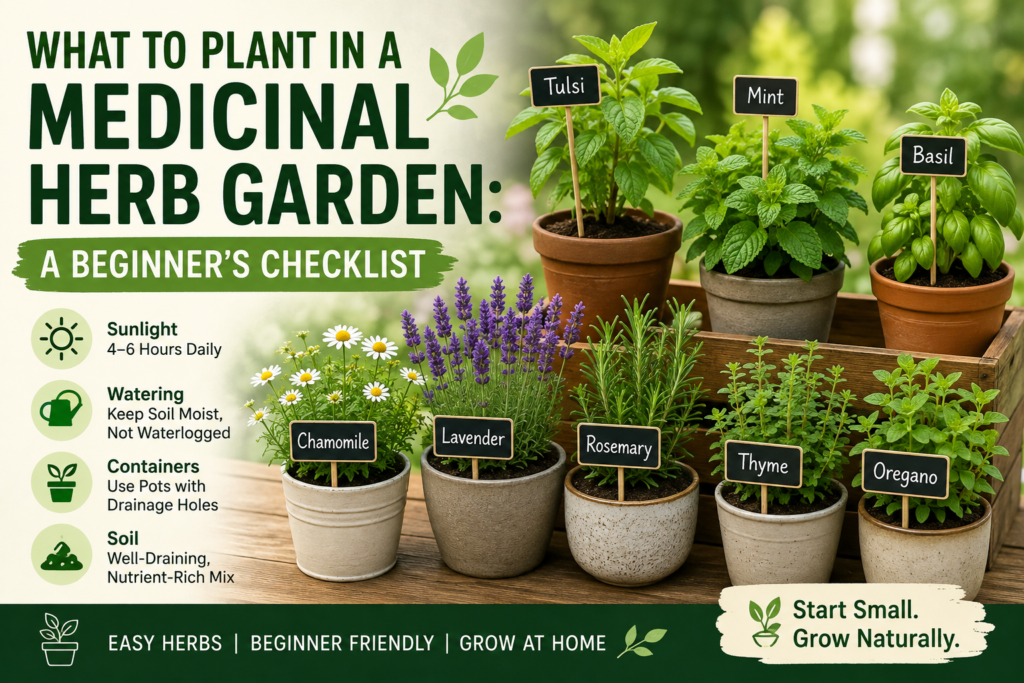
Starting a medicinal herb garden can feel overwhelming when you don’t know which plants to choose. For beginners, the best approach is to start with a small selection of easy-to-grow herbs such as mint, basil, tulsi, chamomile, lavender, rosemary, thyme, and oregano. Choose plants according to your available sunlight, growing space, climate, and gardening experience.
You don’t need a large garden to get started. A few containers, suitable soil, and the right herbs can be enough to create a simple beginner-friendly herb garden.
1. Start With a Small Herb Selection
One of the most common beginner mistakes is trying to grow too many plants at once.
Instead, start with 3–5 herbs that match your growing conditions. Once you understand how to care for them, you can gradually expand your garden.
A simple beginner selection could include:
- Mint
- Basil
- Tulsi
- Chamomile
- Lavender
2. Mint
Mint is one of the easiest herbs for beginners to grow.
It can grow well in containers and usually doesn’t require a complicated setup. However, mint can spread quickly, so keeping it in its own pot is often a good idea.
Beginner checklist:
- ☑ Separate container
- ☑ Bright light or partial sunlight
- ☑ Moist but well-draining soil
- ☑ Regular observation
3. Basil
Basil is another popular choice for a beginner herb garden.
It generally prefers warm conditions and plenty of sunlight. Growing basil in a container also makes it easy to move the plant when necessary.
Beginner checklist:
- ☑ Sunny location
- ☑ Container with drainage
- ☑ Well-draining potting mix
- ☑ Regular watering when the soil starts drying
4. Tulsi
Tulsi, also known as holy basil, is commonly grown in home gardens and containers.
It generally prefers warm conditions and good sunlight. Make sure the container drains properly and avoid keeping the soil constantly waterlogged.
Beginner checklist:
- ☑ Sunny location
- ☑ Suitable container
- ☑ Good drainage
- ☑ Regular but appropriate watering
5. Chamomile
Chamomile can be a good option for a small herb garden.
Its small flowers can also make a container garden look attractive. Give it suitable sunlight and well-draining soil, and follow the growing instructions for your particular variety.
Beginner checklist:
- ☑ Suitable container
- ☑ Good sunlight
- ☑ Well-draining soil
- ☑ Regular monitoring
6. Lavender
Lavender is a popular choice for container gardens because it can grow well in suitable pots with good drainage.
It generally prefers plenty of sunlight and doesn’t like constantly wet soil.
Beginner checklist:
- ☑ Sunny location
- ☑ Well-draining soil
- ☑ Pot with drainage holes
- ☑ Avoid overwatering
7. Rosemary
Rosemary can be a useful addition to a beginner garden.
It generally prefers plenty of sunlight and well-draining conditions. Letting the soil dry somewhat between watering can be preferable to keeping it constantly wet.
Beginner checklist:
- ☑ Plenty of sunlight
- ☑ Good drainage
- ☑ Suitable container
- ☑ Moderate watering
8. Thyme
Thyme is a compact herb that can work particularly well in containers.
Its relatively small size makes it useful for balconies, patios, and other limited spaces.
Beginner checklist:
- ☑ Sunny location
- ☑ Compact pot
- ☑ Well-draining soil
- ☑ Avoid excessive watering
9. Oregano
Oregano is another herb beginners can consider for a container garden.
It generally prefers sunlight and well-draining soil and doesn’t require an extremely large growing space.
Beginner checklist:
- ☑ Sunny location
- ☑ Drainage holes
- ☑ Well-draining potting mix
- ☑ Regular observation
10. Choose Herbs Based on Your Space
Don’t choose herbs only because they’re popular. First look at your available space.
Sunny Balcony
If your balcony receives plenty of sunlight, herbs such as basil, rosemary, thyme, oregano, and lavender may be worth considering, depending on local conditions.
Small Windowsill
For a small indoor setup, choose compact herbs that can tolerate the available light. You may need additional lighting if natural sunlight is insufficient.
Patio or Backyard
With more space, you can use several containers and grow a wider selection of herbs.
11. What Supplies Do Beginners Need?
You don’t need expensive equipment to start.
A basic herb garden can begin with:
- Herb seeds or young plants
- Pots with drainage holes
- Quality potting mix
- Watering can
- Small gardening tools
- Plant labels
- Gardening gloves
If you want a more convenient starting option, you can also look at a ready-made Medicinal Garden Kit.
👉 Read our Medicinal Garden Kit Review to see what it includes and whether it may be suitable for a beginner.
12. Common Beginner Mistakes
Choosing Too Many Herbs
Start small. Managing three healthy plants is better than struggling with fifteen.
Overwatering
Check the soil before watering instead of automatically watering every day.
Ignoring Drainage
Containers should allow excess water to escape.
Choosing Herbs That Don’t Match Your Light
Before buying a plant, check how much sunlight it needs and compare that with your available space.
Not Reading Seed Instructions
Different plants can have different planting depths, spacing, germination requirements, and growing conditions.
Beginner’s Final Checklist
Before planting, ask yourself:
- ☑ Do I know which herbs I want to grow?
- ☑ Does my location provide enough light?
- ☑ Do I have suitable pots?
- ☑ Do the pots have drainage holes?
- ☑ Do I have quality potting mix?
- ☑ Do I know each herb’s watering requirements?
- ☑ Have I labelled my containers?
- ☑ Do I have enough time to care for the plants?
If you’ve checked most of these boxes, you’re ready to begin.
Recommended Starting Setup
If you’re completely new, don’t overcomplicate your first garden.
Start with 3–5 herbs, suitable containers, good potting mix, and a location with appropriate sunlight.
You can then expand your collection as you gain experience.
If you’d rather start with a ready-made gardening option, check out our Medicinal Garden Kit Review before deciding what supplies to buy.
Final Thoughts
Choosing what to plant in a medicinal herb garden doesn’t have to be complicated.
Start with a few beginner-friendly herbs, choose plants that match your space and sunlight, use containers with good drainage, and learn the individual care requirements of each plant.
The goal isn’t to create a huge garden immediately. Start small, learn how your plants respond, and build your garden gradually. 🌿
Ready to Start?
If you want a convenient starting point, read our Medicinal Garden Kit Review to see what the kit includes and whether it fits your beginner gardening setup.
Note: This article discusses herbs primarily from a gardening and general-information perspective. Plants traditionally associated with medicinal uses should not be considered a substitute for professional medical advice or treatment.