10 Medicinal Herbs Beginners Can Grow in Pots
Yes, you can grow many medicinal and traditionally used herbs successfully in pots, even if you have limited space. Herbs such as mint, basil, tulsi, chamomile, and lavender can be suitable for container gardening when they get the right amount of sunlight, water, soil, and drainage. If you’re a beginner, starting with a few easy-to-manage herbs is a simple way to learn how container gardening works.
Why Grow Medicinal Herbs in Pots?
Growing herbs in pots is a practical choice for beginners because you can control the soil, watering, and growing environment more easily. Containers also work well for balconies, patios, windowsills, and other small spaces where a traditional garden may not be possible.
Main advantages include:
- Easy to move pots when sunlight changes.
- Better control over soil and drainage.
- Suitable for small outdoor or indoor spaces.
- Individual herbs can be grown in separate containers.
- Beginners can start with just one or two plants and expand gradually.
10 Medicinal Herbs Beginners Can Grow in Pots
10 Medicinal Herbs Beginners Can Grow in Pots
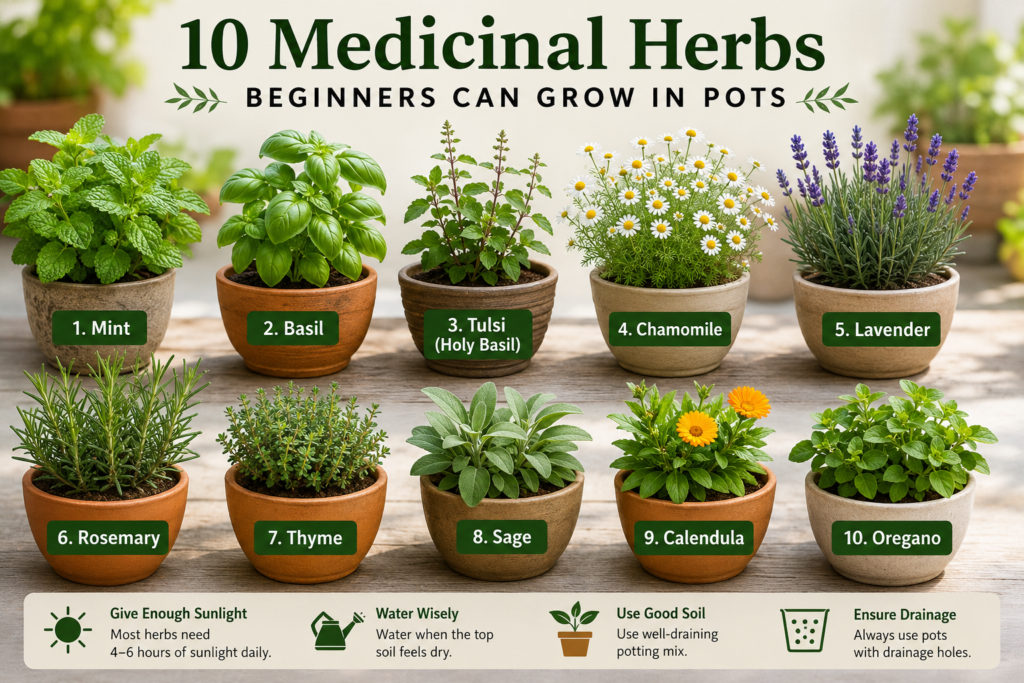
1. Mint
Mint is one of the easiest herbs for beginners to grow in a pot. It grows well in containers and can spread quickly, so keeping it in its own pot is usually a good idea. Place the pot where it receives bright light or partial sunlight and keep the soil lightly moist.
2. Basil
Basil is a beginner-friendly herb that prefers warm conditions and plenty of sunlight. Use a pot with drainage holes and water when the top layer of soil starts to feel dry. Regularly harvesting the leaves can also encourage fresh growth.
3. Tulsi (Holy Basil)
Tulsi is commonly grown in containers and can do well in warm, sunny conditions. Choose a pot with good drainage and give the plant several hours of sunlight each day. Avoid keeping the soil constantly waterlogged.
4. Chamomile
Chamomile can be a good choice for a small container garden. It prefers well-draining soil and a sunny location. Its small flowers also add a pleasant appearance to a beginner herb garden.
5. Lavender
Lavender is well suited to containers when grown in well-draining soil. It prefers plenty of sunlight and does not like consistently wet roots. Choose a pot with drainage holes and allow the soil to dry somewhat between waterings.
6. Rosemary
Rosemary is a hardy herb that can grow successfully in pots with good drainage. It prefers plenty of sunlight and relatively dry conditions between watering. A moderately sized pot gives its roots enough room to develop.
7. Thyme
Thyme is a compact herb that works particularly well in containers. It prefers sunny conditions and well-draining soil. Because it does not require a large amount of space, it can be a useful choice for balconies and small patios.
8. Sage
Sage can be grown in a pot as long as the container provides good drainage. It generally prefers plenty of sunlight and soil that is not kept constantly wet. Beginners should avoid overwatering this herb.
9. Calendula
Calendula can add bright flowers to a container herb garden while remaining relatively easy to manage. Give it a sunny location and use soil that drains well. Remove faded flowers regularly to encourage continued flowering.
10. Oregano
Oregano is another beginner-friendly herb that can grow well in containers. It prefers sunlight and well-draining soil and usually does not need frequent watering once established.
Quick tip: If you’re new to container gardening, start with 2–3 herbs rather than planting all ten at once. This makes it easier to learn how much sunlight and water each plant needs.
How to Choose the Right Pot for Medicinal Herbs
Choosing the right pot can make container gardening much easier for beginners. The most important thing is to choose a container with drainage holes so excess water can escape and the roots do not remain in soggy soil.
Keep these points in mind:
- Choose a pot that is large enough for the herb’s expected growth.
- Make sure the container has one or more drainage holes.
- Use clean pots with enough space for healthy root growth.
- Avoid keeping a small herb in an extremely large container, as excess soil can retain too much moisture.
- For herbs that spread quickly, such as mint, use a separate container.
If you’re growing several herbs, using separate pots can also make it easier to manage their different sunlight and watering needs.
How Much Sunlight Do Potted Herbs Need?
Sunlight requirements vary between herbs, but many popular container herbs grow best when they receive several hours of bright light each day. A sunny balcony, patio, or windowsill can work well, depending on the herb and your local conditions.
For beginners:
- Place sun-loving herbs such as basil, rosemary, thyme, and lavender in a bright, sunny location.
- Mint and some other herbs can tolerate partial shade.
- Rotate indoor pots occasionally so plants receive more even light.
- Watch the leaves for signs of stress after moving a plant to strong direct sunlight.
- If natural light is limited, consider a suitable grow light.
How to Water Medicinal Herbs in Pots
Watering is one of the most important parts of growing herbs in containers. Instead of following a fixed daily schedule, check the soil first. If the top layer feels dry, the plant may need watering. If the soil is still moist, wait before watering again.
Beginner watering tips:
- Water slowly until a little water drains from the bottom of the pot.
- Avoid leaving pots sitting in water.
- Check soil moisture more often during hot or dry weather.
- Reduce watering when conditions are cooler or the plant is growing slowly.
- Remember that different herbs have different moisture preferences.
Best Soil for Growing Herbs in Pots
Good soil helps potted herbs develop healthy roots and makes watering easier to manage. For most beginner herb gardens, a quality, well-draining potting mix is a good starting point.
Keep these tips in mind:
- Choose a potting mix designed for containers.
- Avoid soil that stays waterlogged for long periods.
- Make sure the pot has adequate drainage.
- Don’t pack the soil too tightly around the roots.
- Replace or refresh old potting mix when necessary.
Different herbs have different soil preferences, so check the growing instructions for each plant whenever possible.
How to Start Growing Herbs in Pots
Once you’ve chosen your herbs, pots, soil, and location, getting started is fairly simple.
Step 1: Choose Your Herbs
Start with two or three herbs that match your available space and sunlight.
Step 2: Prepare the Pots
Make sure each pot is clean and has drainage holes at the bottom.
Step 3: Add Potting Mix
Fill the container with suitable potting mix while leaving enough space at the top for watering.
Step 4: Plant the Seeds or Seedlings
Follow the instructions provided with your seeds or young plants for planting depth and spacing.
Step 5: Water Carefully
Water according to the plant’s needs and avoid keeping the soil constantly saturated.
Step 6: Place the Pots in the Right Location
Give each herb the amount of sunlight it needs. Check the plants regularly and adjust their position if necessary.
Common Beginner Mistakes to Avoid
Growing herbs in pots is relatively simple, but beginners often make a few common mistakes.
Overwatering
More water doesn’t necessarily mean faster growth. Constantly wet soil can create problems for plant roots.
Poor Drainage
A pot without proper drainage can allow excess water to accumulate.
Choosing the Wrong Location
Some herbs need plenty of sunlight, while others can tolerate partial shade. Always consider the plant’s individual requirements.
Planting Too Many Herbs Together
Crowding plants can make watering, pruning, and general care more difficult. Give each plant enough room to grow.
Ignoring Plant Labels
Keep track of which herb is growing in each container. This makes it easier to follow the correct care instructions.
How to Maintain a Beginner Herb Garden
Once your herbs are growing, regular observation is more important than complicated maintenance.
Check your plants regularly for:
- Dry or overly wet soil
- Yellowing or damaged leaves
- Signs of pests
- Insufficient sunlight
- Overcrowded growth
- Pots that need repositioning
Remove damaged leaves when appropriate and trim herbs according to their individual growing requirements.
The more you observe your plants, the easier it becomes to understand what they need.
Recommended Supplies for a Beginner Herb Garden
You don’t need a huge collection of gardening equipment to start.
Some useful basics include:
- Herb seeds or young plants
- Containers with drainage holes
- Quality potting mix
- Watering can
- Small gardening tools
- Plant labels
- Gardening gloves
If you’d prefer to start with a ready-made selection rather than purchasing everything separately, you can also consider a Medicinal Garden Kit.
👉 Read our Medicinal Garden Kit Review to see what the kit includes and whether it may be suitable for beginners.
A Simple Beginner Setup
If you’re completely new to growing herbs, keep your first setup simple.
Start with:
2–3 herbs + 2–3 suitable pots + quality potting mix + a sunny location + regular observation.
Once you become comfortable caring for those plants, you can gradually add more varieties.
This approach can help you learn the basics without making your first garden unnecessarily complicated.
Final Thoughts
Growing medicinal and wellness-associated herbs in pots can be a practical project for beginners, especially if you have limited garden space.
Start with a few easy-to-manage herbs, choose containers with good drainage, provide suitable sunlight, and pay attention to your plants’ individual watering requirements.
You don’t need a large garden or expensive equipment to begin. A few pots and the right growing conditions can be enough to start learning.
Ready to Start Your Herb Garden?
If you’re looking for a convenient way to get started, check out our Medicinal Garden Kit Review to learn more about the kit, what it contains, and whether it’s worth considering for your home garden.
Start small, learn as you grow, and expand your herb garden when you’re ready. 🌿
Note: This article discusses herbs from a gardening and general-information perspective. Plants traditionally associated with medicinal or wellness uses should not be considered a substitute for professional medical advice or treatment.
Medicinal Garden Kit Review: Pros, Cons & Is It Worth Buying? →